

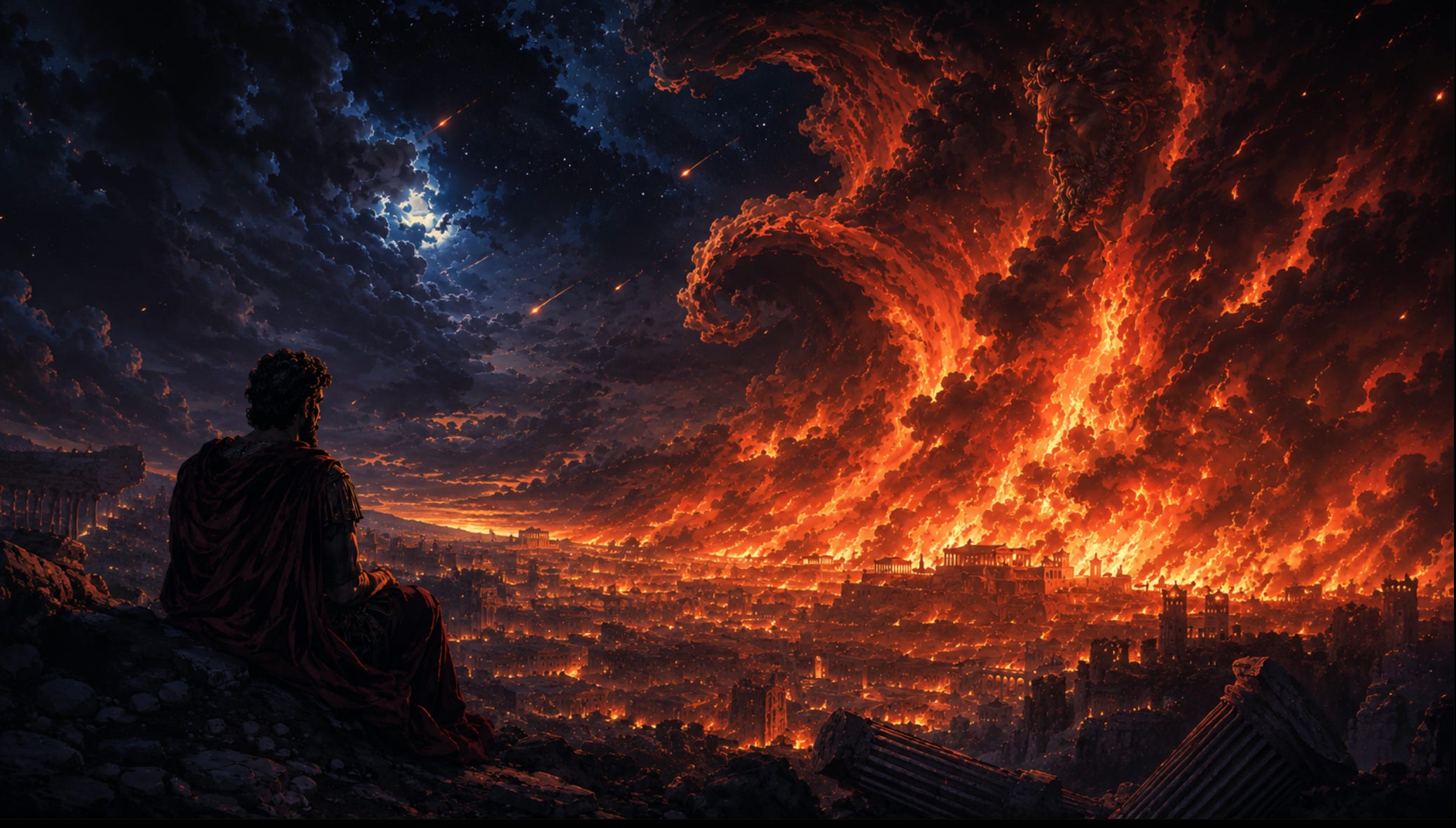
The were old firefighters that studied the wind because it helped them understand what to expect. They knew which gullies pulled flame uphill, which ridges could hold a line, and how far a fire might travel before daybreak. Fire was dangerous but it still moved inside a larger system. When you understood the weather and the land as they did, you could make a decent guess about how to respond.
One of the old men said there was a certain kind of fire for which these facts would stop being true. When it grew hot enough, he predicted that the air above it would rise violently. Cooler air would rush in and feed the flames. More flame would create more heat pulling in more air. Eventually the fire would stop merely moving due to the weather and begin making weather of its own.
Someone asked when this would happen and the old man gave them a year in the future he would barely live to see.
About a decade later another man took the prediction seriously but believed the old firefighter had missed something. The line for when fire would make its own weather might be impossible to see but perhaps you could still measure the sequence of events leading toward it.
He studied fire records and drew curves. He noticed that tools to predict fire patterns were improving but that these better tools helped produce the next tools. Better maps improved fire response. Better sensors helped improved the maps. Each advance became part of the machinery that produced the next one. If that process continued, progress towards understanding this weather changing fire would not merely compound. It would accelerate.
For a long time, neither man looked especially wise. The first man’s year prediction year came and went. Tomorrow still looked enough like yesterday that everyone kept using similar maps and sensors.
Then fires started behaving strangely: they crossed roads that had stopped them before. They burned through nights when they were expected to settle. They jumped small streams and kept raging. Past records for size, scope and burn time set by old fires were not just falling. They began falling faster.
There were good reasons to exert pause. Forests were drier and winds were a little bit stronger than they had been in the past. But measurements had changed and the steepness of the curve of new mega fires made it hard to understand if it would keep rising. After all, a fire runs spreads until it reaches wet ground and a drought looks permanent until it rains.
Then, one morning in August, the largest insurance company in the state sent a letter to its owners. It said the new era fires that would make their own weather had already begun and gave the exact day: January 1 earlier that year
The company said it was now operating on the assumption that the old fire rules no longer applied. It could see the change in its own books. Towns were rebuilding. Landowners were clearing trees. New companies were selling water bombing aircraft, early warning sensors and more advanced fireproofing materials. The insurer itself had just made its largest purchase in history in anticipation.
For a moment, everything lined up. The old firefighter had predicted the change. The other man had drawn the curve toward it. Now the company with significant monied interest exposed to the threat of this worldfire said the line had been crossed.
But the old firefighter’s point was that when a fire makes its own weather, it marks a line where all previous forms of prediction about fire behavior — knowledge of land and wind — would begin to fail.
The insurance company was now claiming to know exactly when it happened, why it happened, and what would happen next.
Maybe something had changed. But more likely than not it had a reason to prefer the grander story. “The world has changed” is a useful thing to tell your investors after making the largest bet in your history.
The dates may prove absurd. The curve may flatten. Or the rain may actually come.
But the company’s letter mattered because it signaled that they had stopped waiting.
For decades, people had argued about whether a fire could ever become powerful enough to make its own weather. Now people with money at risk were spending as though it already had.
This story is not about fire.
The old firefighter is Vernor Vinge1.
The man who drew the curves was Ray Kurzweil2.
The insurance company is Stripe3.
Yesterday, August 19th, Stripe told its investors that the singularity began on January 1, 2026 after they bought OpenRouter for $8B.
If Vinge was right, Stripe can’t know that.
But Stripe is buying the planes.